About the Museum

A Legacy Preserved. A Story Shared.
The Maharaja Fatehsingh Museum stands as more than a repository of art—it is a living institution that reflects vision, heritage, and scholarship. Each object within its walls carries a narrative, offering visitors a journey through time, culture, and artistic excellence.
Vision & Mission
To protect, preserve, enlarge, and improve collections of art, articles of decoration, pictures, portraits, and other related items within the museum's purview. To assist researchers and scholars in the study and research of art, including literary, scientific, historical, and religious matters, contributing to the advancement of knowledge in general.
Legacy & Inspiration
After Independence, royal artworks, once dispersed across various palaces, were brought back to the Lukshmi Vilas Palace. It was here that Maharaja Fatehsinghrao Gaekwad envisioned a museum within the former Prince School building—creating a space to preserve and share this extraordinary artistic legacy.
Establishment
In 1958, noted art historian Hermann Goetz was invited to design the museum. After extensive research across leading European institutions, the museum formally opened to the public on 11 April 1961.
Evolution
From its early foundations, the museum has evolved into one of India’s most significant cultural institutions, bridging Indian tradition with global artistic narratives.
Museum Trustees & Leadership
Maharaja Fatesinghrao Gaekwad (1930–1988)
Born on 2 April 1930 in Baroda, Maharaja Fatesinghrao Gaekwad was the eldest son of Maharaja Pratapsinhrao Gaekwad and Maharani Shantadevi. As Yuvraj, he was strongly influenced by his great-grandfather, Maharaja Sayajirao Gaekwad III, whose progressive vision of education, culture, and public service shaped his outlook. He studied at Motibaug Prince’s School and was later awarded an honorary Doctor of Letters (D.Litt.) by the Maharaja Sayajirao University of Baroda. He also held the honorary rank of Lieutenant-Colonel in the Baroda Lancers.
He began his public career as Aide-de-Camp to the Governor-General of India (1948–49) and became the Titular Maharaja of Baroda in 1951. He entered democratic politics, serving as a Member of Parliament for Vadodara in the Lok Sabha (1957–1967, 1971–1980) and later in the Gujarat Vidhan Sabha. He held important positions including Parliamentary Secretary to the Ministry of Defense and Minister for Health, Fisheries, and Jails. Beyond politics, he was a pioneering industrialist who founded Baroda Rayon Corporation Ltd. in 1956, contributing to regional development. A passionate sportsman, he played first-class cricket for Baroda and later served Indian cricket as a manager, commentator, and the youngest President of the BCCI.
A committed conservationist, he helped establish WWF-India in 1969 and supported wildlife protection initiatives. He also founded the Maharaja Fatesingh Museum in 1961, reflecting his dedication to art and heritage. He passed away in 1988, leaving a lasting legacy of public service, cultural patronage, and progressive leadership.

Maharani Shantadevi Gaekwad (1914 -2002)
Born in a Maratha family of Kolhapur Maharani Shantadevi, was the first wife of Maharaja Pratapsinrao Gaekwad. Maharani Shantadevi is remembered in modern Indian history as one of the most resilient and dignified Maharanis of her times. Belonging to a noble Ghorpade family of Kolhapur. Her engagement was arranged to Pratapsinhrao, when at the age of 13. Together they had eight children, out of which three were sons and 5 were daughters. She was the president of the Kamatibaug Women's Club (Maharani Chimnabai Ladies Club, located inside Sayajibaug). Along with being an active sportsperson herself she was periodically an acting regent of the state - the only lady in the dynasty to receive this honour. Maharani Shantadevi went on to set up the much reputed Maharani Shantadevi Hospital and was representative of a bygone era, a bridge between pre and post independent India.

Maharaja Ranjitsinh Gaekwad (1938–2012)
Maharaja Ranjitsinh Gaekwad, born on 8 May 1938 to Maharani Shantadevi and Maharaja Pratapsinhrao Gaekwad, was a distinguished member of the Baroda royal family and a multifaceted personality—artist, vocalist, sportsman, and public figure. He ascended the throne in 1988 and upheld Baroda’s legacy as a cultural and educational centre.
Raised in the artistic environment of Laxmi Vilas Palace, he studied at the Faculty of Fine Arts Baroda under masters such as N. S. Bendre and K. G. Subramanyan, and later at the Royal Academy of Arts. An accomplished painter, he exhibited widely in India and abroad.
A trained Hindustani classical vocalist, he performed at prestigious venues and collaborated with artists like Anuradha Paudwal. He also supported the arts by opening palace spaces for concerts and founding institutions such as INTACH and the Maharaja Fatesingh Museum Trust. He served as Member of Parliament (1980–1989) and remained active in public life. The festival celebrates his enduring legacy as an artist, musician, and patron of the arts.
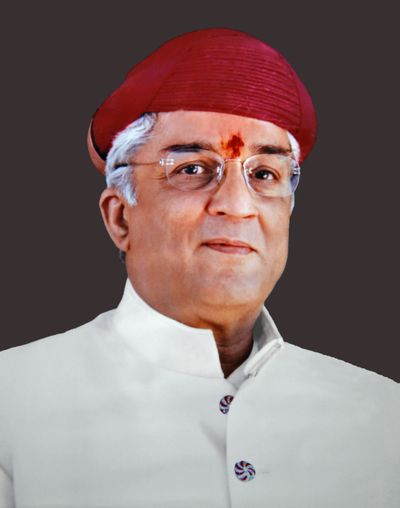
Rajmata of Baroda, Her Highness Shubhanginiraje Gaekwad (b. 24 February 1945)
She graduated with Honours in History, English Literature, and Economics from University of Lucknow in 1964 and has been the Chancellor of Maharaja Sayajirao University of Baroda since 2012.
Actively engaged in social service, she has contributed significantly to women’s welfare and empowerment. She served as President of Mahila Sahakari Bank (1986–1998) and Co-Chairperson of the Family Planning & Social Welfare Committee at Federation of Indian Chambers of Commerce & Industry (1999–2001). She is Trustee of the Sir Sayajirao Diamond Jubilee & Memorial Trust and President and Trustee of Maharani Shantadevi Hospital, a National Award-winning ‘Child-Friendly Hospital.’ She is also associated with Maharani Chimnabai Stree Udyogalaya, Maharaja Fatesingh Museum Trust, Bal Bhavan Society Trust, and Swar Vilas, a leading institution for Hindustani classical music in Gujarat.
She is actively involved in environmental initiatives as President of the Greenery Promotion Committee of SOCLEEN and a member of World Wide Fund for Nature India. She advocates universal primary education, especially for girls, and promotes collaboration between industry and education. She has travelled extensively across the USA, Canada, the UK, Europe, the Middle East, and the Far East
Maharaja Samarjitsinh Gaekwad
Maharaja Samarjitsinh Gaekwad was born on 25 April 1967 as the only son of Ranjitsinh Pratapsinh Gaekwad and Shubhanginiraje.
He received his schooling at the Doon School in Dehradun. While at school he pursued his passion for sports and simultaneously captained the school's cricket, football, and tennis teams. He later on received his Bachelor's Degree in Commerce from the famed Maharaja Sayajirao University of Baroda. Maharaja Samarjitsinh played cricket for Baroda in the Ranji Trophy. Between the 1987/88 and 1988/89 seasons, he appeared in six first-class matches as a top-order batsman. He went on to become a cricket administrator and served as the president of the Baroda Cricket Association. He runs a cricket academy (originally set up by Maharaja Sayajirao III) at the Moti Bagh Stadium. He has been the President of the Gaekwad Baroda Golf Club (GBGC) since 1996 and has developed world class sporting facility in Baroda.
After the death of his father in May 2012, Samarjitsinh ascended the Gadi in a traditional ceremony at Lukshmi Vilas Palace on 22 June 2012. Maharaja Samarjitsinh manages the Lukshmi Vilas Palace, Moti Bagh Stadium, and Maharaja Fatesingh Museum. He oversees the royal Temple Trust that includes nearly twenty temples spread over India.
Maharaja Samarjitsinh is married to Maharani Radhikaraje and is blessed with two daughters, Princess Padmajaraje and Princess Narayaniraje.

Maharani Radhikaraje Gaekwad
Born into the princely family of Wankaner, Gujarat, Maharani Radhikaraje Gaekwad was educated in Delhi and at Mayo College, Ajmer. She graduated in History (Honours) from Lady Shri Ram College and completed her Master’s in Medieval Indian History from Delhi University. She began her career as a journalist with The Indian Express before marrying Samarjitsinh Gaekwad and moving to Baroda.
She is actively engaged in heritage conservation and social initiatives. She is associated with Shri Maharani Chimnabai Stree Udyogalaya (SMCSU), a pioneering institution dedicated to women's empowerment through education, skill development, livelihood generation, social welfare and community development and the Maharaja Fatesingh Museum Trust, which houses significant art collections, including works by Raja Ravi Varma.
As Patron of the Heritage Trust, she has contributed to conservation efforts, including support for Champaner’s recognition as a UNESCO World Heritage Site. She is also involved in documenting palace collections.
Working alongside Rajmata Shubhanginiraje Gaekwad, she supports the revival of traditional textiles such as Chanderi and Baroda Shalu. A writer and speaker, she contributes to publications and participates in cultural forums. She has received several honours, including an Honorary Doctorate from the University of East London (2023), recognising her contributions to heritage, education, and women’s empowerment.
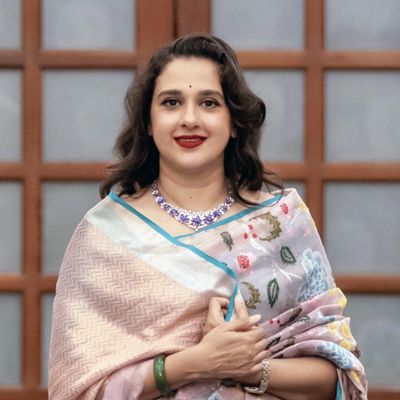
Maharajkumari Alaukikaraje Gaekwad Khachar
Alaukika Raje Gaekwad Khachar is a member of the illustrious Gaekwad dynasty of Baroda. She is the daughter of the late Maharaja Ranjitsinh Gaekwad and Rajmata Shubhanginiraje Gaekwad of Baroda and was raised amidst the rich cultural and artistic legacy of the Gaekwad family at the historic Lukshmi Vilas Palace, Vadodara.
Alaukika Raje is married to Yuvraj Satyajitsinh Khachar, Darbarsaheb of Jasdan, one of the prominent royal families of the Saurashtra region of Gujarat. Through her association with both the Gaekwad and Khachar families, she remains actively engaged in preserving and promoting the cultural traditions, heritage and historical legacy of Gujarat.
Deeply interested in art, culture, history and heritage preservation, Alaukikaraje supports initiatives that celebrate India's diverse cultural traditions and strengthen public engagement with heritage.
As a Trustee of the Maharaja Fatesingh Museum Trust, she contributes to the Trust's efforts to preserve, interpret and showcase one of India's most significant royal collections for future generations.
She continues to play an active role in cultural, social and heritage-related initiatives, while promoting awareness of the traditions, festivals and living heritage associated with the royal houses of Baroda and Jasdan.

Manda Hingurao
Manda Hingurao has served as Curator and Secretary of the Maharaja Fatesingh Museum Trust since 2000, playing a key role in developing its collections and outreach. She curated Maharaja Ranjitsinh Gaekwad’s Headgear Collection for the permanent gallery and organised major exhibitions, including Women’s Education in the Era of Maharaja Sayajirao III, Baroda Still Batting, and Revival of Chanderi Saree.
She facilitated the transfer of the Raja Ravi Varma collection to the National Gallery of Modern Art, Mumbai (2003), and has led several initiatives with IGNCA, including restoration of the Ravi Varma Studio, conservation of artworks, and relocation of the statue of Maharani Chimnabai I (2023). Since 2016, she has headed the Lukshmi Vilas Palace Documentation Project.
Hingurao has organised public programmes such as Start with Art, essay competitions, and Granthaswad, a Marathi reading club that ran for over nine years. She is the organising Secretary of Shree Sayaji Smarak Samiti and an Advisory Member of Shree Sayaji Pratisthan.
An accomplished researcher, she has authored books on Maharaja Sayajirao III and women’s empowerment, edited several historical works, and contributed to the revival of rare publications on education, arts, and crafts.
